
10 Reasons Your Water Leak Detection System Isn’t Protecting Your Building (And How to Fix It)
Managing a multi-unit residential building or a commercial property in **Burnaby** is no small feat. Between staying on top of maintenance schedules and keeping tenants happy, the last thing you want is a frantic 3 AM ph…

Managing a multi-unit residential building or a commercial property in Burnaby is no small feat. Between staying on top of maintenance schedules and keeping tenants happy, the last thing you want is a frantic 3 AM phone call about a burst pipe on the 12th floor. If you’ve already invested in a water leak detection system, you’ve taken a great first step toward peace of mind. But here’s the reality: simply having sensors in place doesn't guarantee your building is safe.
At Leak Logic Canada, we’ve seen too many property managers in the Lower Mainland rely on systems that are either poorly installed, outdated, or simply not up to the task of high rise water leak detection. If your system isn't functioning correctly, you’re not just risking property damage; you’re risking your insurance standing and your reputation.
Let’s dive into the ten most common reasons your leak detection might fail you: and more importantly, how you can fix it.
1. False Alarms from Dust and Debris
Imagine your phone buzzing at midnight with a leak alert. You rush to the building, only to find a perfectly dry floor. After this happens three or four times, what do you do? You start ignoring the alerts. This "alarm fatigue" is a silent killer for building safety.
The Problem: In many commercial or industrial spaces, dust and debris can accumulate on sensing cables. Dust can actually hold onto microscopic amounts of moisture from the air, tricking the system into thinking there’s a puddle.
The Fix: Ensure your sensors and cables are placed away from high-traffic, dusty areas. Regular maintenance is key: wipe down your sensors (carefully!) and keep the area around them clean. If you're using a smart water leak detector, check the sensitivity settings to ensure they are calibrated for your specific environment.
2. Poor Sensor Placement Near Condensation Sources
A sensor is only as good as its location. We often see sensors placed directly under HVAC units or near poorly insulated cold water pipes where condensation is a regular occurrence.
The Problem: Droplets of condensation can fall directly onto a sensor, triggering a full-scale shutoff when there isn't an actual leak. This leads to unnecessary downtime and frustration for residents.
The Fix: You need precise leak sensor placement. Place sensors in areas where water would naturally pool during a real leak, but keep them slightly shielded from direct "sweating" pipes. Using high-quality wireless sensors, like those from Nowa, allows you to reposition them easily without rewiring the whole floor.

3. Weak Wi-Fi or Network Signals
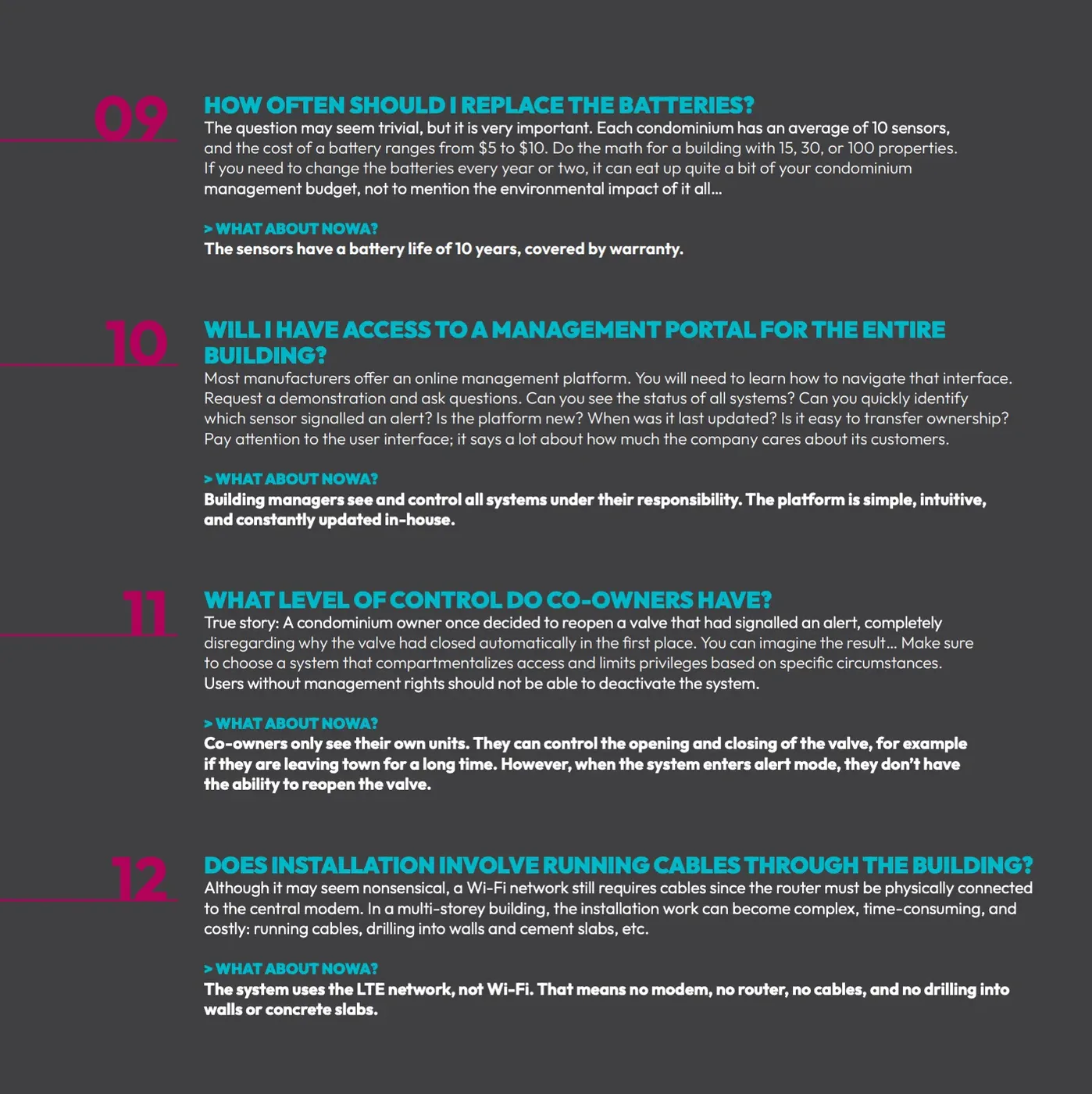
In a large concrete building: typical for many Burnaby high-rises: Wi-Fi is notoriously spotty. If your smart water leak detector loses its connection to the gateway, it's essentially a paperweight.
The Problem: Many "off-the-shelf" consumer systems rely on the building’s guest Wi-Fi. If the router resets or the signal can’t penetrate the mechanical room walls, the alert will never reach your phone.
The Fix: Look for a professional system like the Nowa 4S, which utilizes LTE connectivity. By bypassing the local Wi-Fi and using a dedicated cellular signal, you ensure the system stays online 24/7. This is a game-changer for wireless monitoring in real estate.
4. Power Supply Failure and Dead Batteries
It sounds simple, but you’d be surprised how often a system fails because a battery died and nobody noticed.
The Problem: Older sensors often have a battery life of just a year or two. In a building with 100+ units, keeping track of battery replacements is a logistical nightmare. If the main control panel gets unplugged during a routine cleaning, the whole system might go down.
The Fix: Switch to a system designed for longevity. Nowa sensors, for example, offer up to a 10-year battery life. Additionally, ensure your main control panel is hardwired and has a dedicated backup battery. Regular system "heartbeat" checks: where the hub pings every sensor to ensure it's alive: are essential for preventing condo water damage.
5. Lack of an Automatic Water Shut Off Valve
Detecting a leak is great. Stopping it is better. If your system only sends a notification but doesn't stop the flow, you're still looking at thousands of dollars in damage if the leak happens when no one is around.
The Problem: Many basic systems are "notification only." By the time a property manager sees the text and drives to the building, the water has already traveled through three floors of drywall and flooring.
The Fix: Every professional high rise water leak detection setup must include an automatic water shut off valve. When the sensor hits water, the valve closes the main line instantly. This is the difference between a minor cleanup and a six-figure insurance claim.
6. Loose or Damaged Cable Connections
In mechanical rooms, things get moved. Tools are dropped, and janitorial staff might accidentally kick a sensing cable.
The Problem: If the physical connection between the sensor and the transmitter is broken, the circuit is interrupted. The system might show an "Error" state, or worse, it might show nothing at all while being completely unable to detect a leak.
The Fix: Inspect your hardware quarterly. Ensure all cables are secured and labeled. Avoid sharp bends in sensing ropes, as these can damage the internal wires over time. Proper cable management is a hallmark of a professional installation.
7. Moisture Trapped Inside Sensors After a "Minor" Event
Maybe there was a tiny spill that got cleaned up quickly. You might think the sensor is fine because the alarm stopped, but moisture can linger.
The Problem: Residual moisture trapped inside the sensor housing can lead to corrosion or persistent "phantom" alarms weeks later. It can also cause the sensor to cycle on and off, draining the battery in a matter of days.
The Fix: After any water event: even a small one: open the sensor, dry it thoroughly with a soft cloth, and let it air dry before putting it back. If the sensor was submerged, it’s often safer to replace the unit entirely to ensure real-time monitoring reliability.
8. Outdated Firmware
In the world of IoT (Internet of Things), software is just as important as hardware.
The Problem: Manufacturers frequently release updates to patch security vulnerabilities or improve sensor accuracy. If your system is running on 5-year-old firmware, it might not communicate correctly with newer mobile apps or cloud servers.
The Fix: Work with a provider like Leak Logic Canada that offers managed services. We ensure your Nowa system is always running the latest firmware, keeping your building sensors compatible and secure.

9. Inadequate Square Footage Coverage
We often see buildings that have sensors in the basement but nothing near the washing machines or water heaters in individual units.
The Problem: A leak on the top floor will cause massive damage long before a basement sensor ever sees a drop. You can't protect a 20-story building by only watching the mechanical room.
The Fix: A comprehensive strategy for condo water damage requires sensors at every high-risk point: under sinks, behind toilets, near dishwashers, and around water heaters. It’s about creating a "web" of protection that covers the entire property.
10. No Professional Monitoring or Response Plan
If a sensor goes off at 2 AM on a Sunday, who gets the alert? If it's just the property manager's phone and they're asleep, the "smart" part of your system isn't doing much.
The Problem: Relying on a single person to respond to alerts is a recipe for disaster. People go on vacation, phones go on "Do Not Disturb," and batteries die.
The Fix: Integrate your system with a 24/7 monitoring service. Professional monitoring ensures that if a leak is detected, the right people are notified immediately, and the automatic water shut off valve is verified as closed. This level of protection is often what insurance companies look for when offering premium discounts.

Summary: Is Your Building Actually Protected?
A water leak detection system is not a "set it and forget it" tool. It is a critical piece of safety infrastructure, much like your fire alarm system. Especially in a growing city like Burnaby, where modern high-rises are the norm, the complexity of plumbing systems requires a sophisticated defense.
If you’re unsure whether your current system is up to the task, or if you’re looking to install a new water leak detection system near me in the Lower Mainland, don’t wait for a flood to find the flaws. From freeze sensor innovations to real-time LTE monitoring, we have the tools to keep your property dry and your residents happy.
Protect your investment today.
Whether you’re in Vancouver, Burnaby, Richmond, or anywhere in the Lower Mainland, Leak Logic Canada is your local expert in water damage prevention. We specialize in Nowa technology that stops leaks before they become disasters.
Call Leak Logic Canada today for a professional consultation and ensure your building is truly protected!
Don't wait for a leak to happen.
Protect your property with a professionally installed NOWA automatic shut-off system. Contact us for a free assessment.