
Richmond High-Rise Water Leak Risks: The Most Common Failure Points (And How to Catch Leaks Early)
If you're managing, owning, or living in a Richmond high-rise, you already know water damage isn't just a possibility: it's one of the biggest operational risks you face. Suite-to-suite leaks, mechanical room floods, and…

If you're managing, owning, or living in a Richmond high-rise, you already know water damage isn't just a possibility: it's one of the biggest operational risks you face. Suite-to-suite leaks, mechanical room floods, and aging infrastructure create a perfect storm of vulnerability. The good news? Most high-rise water disasters are preventable if you catch the warning signs early and put the right systems in place.
Leak Logic Canada works with property managers, strata councils, and homeowners across Richmond and the Lower Mainland to stop water damage before it starts. In this guide, we'll walk through the most common leak failure points in Richmond high-rises, how to spot trouble early, and how modern leak detection systems like Nowa can protect your building 24/7.
What are the biggest water leak risks in Richmond high-rises?
Richmond's high-rise buildings face unique challenges. Many were built during rapid development phases in the 1980s–2000s, which means aging plumbing infrastructure, vertical pressure stress, and climate-driven wear are now converging. Here are the most common failure points:
1. Mechanical rooms and riser pipes
Mechanical rooms house the backbone of your building's water system: pressure-boosting pumps, main shut-off valves, water heaters, and vertical risers that distribute water to every floor. When a riser pipe corrodes or a connection joint fails, the result is catastrophic flooding that can cascade down multiple floors.
Vertical stress is a real issue. Water traveling up 20+ stories puts constant pressure on pipes, joints, and fittings. Temperature fluctuations in unheated mechanical rooms (especially during Richmond's cold snaps) cause pipes to expand and contract, weakening seals over time.

2. Fan coil units in individual suites
Fan coils are the silent culprits in many Richmond condo leaks. These HVAC units use water to heat and cool your suite, and they sit in closets or ceiling cavities: out of sight, out of mind. When condensate drain lines clog or overflow pans crack, water leaks slowly into walls, ceilings, and down into the suite below.
The problem? By the time you see visible water damage, mold may already be growing behind drywall. Fan coil leaks are especially common in older buildings where routine maintenance schedules have lapsed.
3. Hot water tanks in suites and common areas
Water heaters are ticking time bombs after 8–12 years of use. Sediment buildup, internal corrosion, and faulty pressure relief valves can cause tanks to rupture without warning. In a high-rise suite, a 40-gallon tank failure means instant flooding: and if you're not home, that water keeps pouring until someone notices or the tank empties completely.
Buildings with centralized hot water systems face similar risks in mechanical rooms, where a single tank failure can affect multiple floors.
4. Washing machines and dishwashers
Appliance supply lines are among the top causes of suite floods. Rubber hoses degrade over time, braided steel lines can develop pinhole leaks, and loose connections can vibrate free. Washing machines are particularly risky because they cycle high-pressure water repeatedly, stressing connections with every load.
Dishwashers often hide leaks under cabinets until flooring starts warping or the suite below reports ceiling damage.
5. Pressure-reducing valves (PRVs)
In high-rises, PRVs regulate water pressure entering individual suites (usually set around 50–60 psi). When a PRV fails, pressure spikes can burst supply lines, rupture appliance connections, or blow out toilet fill valves. The sudden surge often happens when you're not home, leading to uncontrolled flooding.
PRVs are often installed in hard-to-reach spots (behind access panels or in suite entry corridors), so failure can go unnoticed until pressure problems become obvious.
6. Aging pipe infrastructure (clay, cast-iron, and galvanized steel)
Richmond's older neighborhoods: especially around City Centre and the original core: have buildings with legacy plumbing: clay or cast-iron sewer laterals, galvanized steel supply lines, and copper that's reaching the end of its lifespan. Clay and cast-iron pipes have multiple joints that crack under ground movement or root intrusion. Fine root hairs slip through tiny gaps, eventually forming dense mats that catch debris and cause backups.
Galvanized steel corrodes from the inside out. Water flow slows, discoloration appears, and eventually, pinhole leaks or burst sections occur. If your building was built before 1990 and hasn't had a re-pipe, you're at higher risk.

How do I know if my Richmond high-rise has a leak problem?
Catching leaks early is the difference between a $500 repair and a $50,000 insurance claim. Watch for these warning signs:
Visible water damage or staining on ceilings, walls, or floors: especially in suites directly below mechanical rooms, bathrooms, or kitchens.
Pressure drops when multiple taps are running, or inconsistent water flow between floors.
Gurgling sounds in lower-level toilets or floor drains, which often signal blockages or backups in vertical stacks.
Water pooling in parkade areas, elevator pits, or mechanical room floors.
Musty odors or visible mold in suite closets, behind appliances, or in ceiling access points.
If any of these sound familiar, it's time to investigate before the problem escalates.
What should Richmond property managers do to prevent high-rise leaks?
Prevention is always cheaper than remediation. Here's a practical checklist:
Regular maintenance schedule
- Inspect mechanical rooms quarterly for signs of corrosion, leaks, or moisture buildup
- Service fan coil units annually (clean drain lines, check overflow pans)
- Replace hot water tanks before they hit 10–12 years of age
- Test PRVs and pressure-boosting systems annually
- Flush and inspect vertical risers as part of routine plumbing audits
Proactive monitoring
- Install leak detection sensors in high-risk areas: mechanical rooms, under hot water tanks, near washing machines, beneath fan coils, and around PRVs
- Use systems with 24/7 monitoring and real-time alerts (text, email, app notifications)
- Ensure sensors can distinguish between actual water and humidity (gold-plated probes help with accuracy)
Upgrade aging infrastructure
- Budget for pipe replacements in older buildings (clay/cast-iron sewer laterals, galvanized steel supply lines)
- Consider video camera inspections to identify root intrusions or scale buildup before failures occur
- Replace rubber appliance hoses with braided steel or auto-shutoff connectors
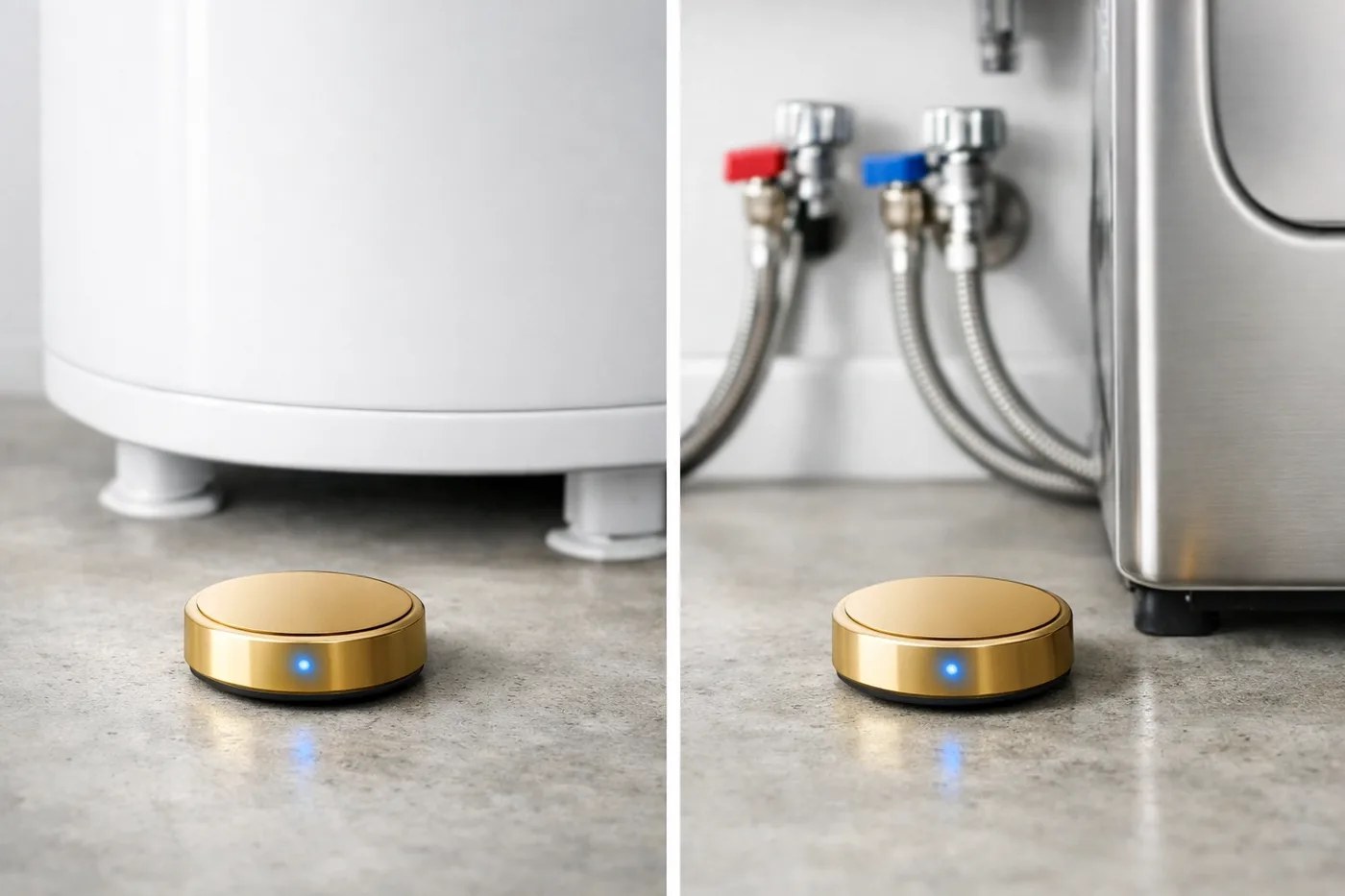
How does the Nowa leak detection system work in Richmond high-rises?
The Nowa system from Leak Logic Canada is designed specifically for the complex plumbing environments in high-rises, condos, and multi-dwelling units across Richmond and the Lower Mainland. Here's how it protects your building:
1. Smart leak sensors (water vs. humidity detection)
Nowa sensors use gold-plated probes that detect actual liquid water: not just humidity spikes. This means fewer false alarms from bathroom steam or laundry room moisture. Place sensors under hot water tanks, near washing machines, beneath fan coils, in mechanical rooms, and around PRVs.
2. Automatic water shutoff valves
When a sensor detects water where it shouldn't be, the Nowa system can trigger an automatic shutoff valve to stop water flow immediately. This is critical in high-rises where unattended leaks can cascade through multiple floors. Shutoff happens within seconds: long before someone notices the problem manually.
3. 24/7 monitoring and instant alerts
Nowa systems send real-time alerts via text, email, and mobile app the moment a leak is detected. Property managers, building engineers, and strata councils get notified instantly, no matter where they are. You can also set escalation rules (e.g., if the primary contact doesn't respond within 10 minutes, alert the backup contact).
4. Freeze detection and low-temperature alerts
In Richmond's colder months, unheated mechanical rooms or exposed pipes can freeze and burst. Nowa sensors monitor temperature and send alerts when readings drop below 5°C, giving you time to heat the space or insulate vulnerable pipes before disaster strikes.
5. False alarm reduction
Because Nowa sensors distinguish between water and humidity, you avoid the "cry wolf" problem common with cheaper systems. When an alert goes off, you can trust it's a real issue that needs immediate attention.
Where should I install leak detection sensors in a Richmond high-rise?
Strategic sensor placement is key. Focus on these high-risk zones:
- Mechanical rooms: Under pressure-boosting pumps, near main shutoff valves, around water heaters
- Suite entry corridors: Near PRVs and water meters
- Individual suites: Under washing machines, dishwashers, hot water tanks, and beneath fan coil units
- Elevator pits and parkade floors: Where water tends to pool during leaks
- Roof mechanical areas: Around HVAC equipment and condensate drains
For maximum protection, combine sensors with automatic shutoff valves on main supply lines and suite-level connections.
Who should I call for leak detection system installation in Richmond?
If you're ready to protect your Richmond high-rise from water damage, Leak Logic Canada is here to help. We serve property managers, strata councils, condo owners, and homeowners across Richmond, Vancouver, Burnaby, Surrey, and the entire Lower Mainland.
Our team will walk you through your building, identify the highest-risk areas, and design a custom leak detection and auto-shutoff solution using Nowa technology. Whether you're retrofitting an older building or equipping new construction, we'll make the process straightforward and stress-free.
Call Leak Logic Canada today to schedule a building walkthrough and get a quote for your Richmond high-rise. Protect your investment, reduce insurance claims, and give your residents peace of mind: before the next leak happens.
Looking for "leak detection system near me" in Richmond? You've found the right partner. Leak Logic Canada is your local expert in smart water damage prevention across the Lower Mainland. Let's stop leaks before they start.
Don't wait for a leak to happen.
Protect your property with a professionally installed NOWA automatic shut-off system. Contact us for a free assessment.