
The Hidden Liability: What Happens When a Tenant’s Leak Floods the Whole Building?
It’s 2:00 AM on a Tuesday in a sleek high-rise in downtown Vancouver. While most of the building is asleep, a tiny hairline fracture in a washing machine hose on the 14th floor finally gives way. The tenant in that unit …
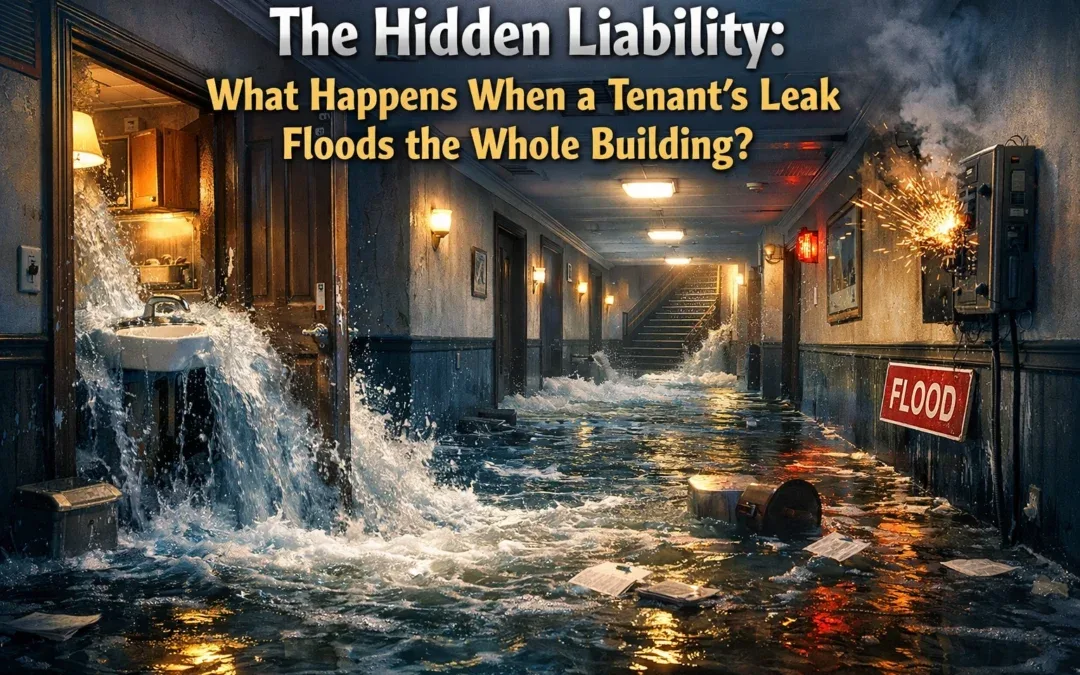
It’s 2:00 AM on a Tuesday in a sleek high-rise in downtown Vancouver. While most of the building is asleep, a tiny hairline fracture in a washing machine hose on the 14th floor finally gives way. The tenant in that unit is a heavy sleeper, or maybe they’re away for the weekend visiting family in Kelowna.
By 2:15 AM, water is pooling under the baseboards. By 2:30 AM, it’s found the utility chase and is beginning its steady, rhythmic journey downward. It bypasses the 13th floor’s kitchen, soaks through the 12th floor’s expensive hardwood, and eventually triggers a fire alarm on the 10th floor when it hits a smoke detector.
When a tenant’s leak floods the whole building, the physical damage is just the beginning. The real nightmare is the legal and financial "hidden liability" that follows, a mess of insurance claims, skyrocketing deductibles, and finger-pointing that can haunt a Strata Council or Property Manager for years.
The Ripple Effect: Meeting the Neighbors You Never Wanted to Know
In a Vancouver high-rise, you aren’t just responsible for your own four walls; you are part of a vertical ecosystem. When a leak occurs, it introduces the "neighbor you never met" storyline. This is the resident four floors down who has absolutely no connection to the tenant on the 14th floor, yet finds their life turned upside down because of someone else’s neglected maintenance.
For Property Managers, this is where the logistics get grueling. You aren't just dealing with one repair; you’re managing the frustrations of ten different households, three different insurance adjusters, and a restoration crew that’s tearing out drywall across multiple levels.
The emotional toll on a building’s community is massive. Trust erodes quickly when residents feel their homes are at the mercy of a neighbor’s negligence. This is why we advocate so strongly for advanced leak detection and insurance savings, because preventing the spread is the only way to keep the peace.
Who is Actually Liable? The Negligence vs. Maintenance Tug-of-War
When the water stops flowing, the paperwork starts flying. One of the biggest strata insurance leak issues we see in the Lower Mainland is the confusion over who pays for what.
Generally, liability hinges on one question: Was the leak caused by tenant negligence or a failure in the building’s common property?
- Tenant Negligence: If a tenant leaves a bathtub running, ignores a visibly leaking toilet for weeks, or puts a brick in their dishwasher, they (and their personal insurance) are typically on the hook.
- Building Failure: If a main stack pipe bursts inside a wall, property that the Strata is responsible for, the building's insurance takes the lead.
However, even if the tenant is clearly at fault, the Strata’s insurance often has to step in first to cover the massive structural repairs. This leads us to the most painful part of the equation: the deductible.

The "Deductible Trap" in Lower Mainland Strata Complexes
If you’ve been managing property in Vancouver, Burnaby, or Richmond lately, you know that strata insurance deductibles have gone through the roof. A few years ago, a $5,000 or $10,000 deductible was standard. Today? We’re seeing deductibles hit $50,000, $100,000, or even $250,000 for "water-heavy" buildings.
When a tenant causes a flood, the Strata Council is often forced to pay that massive deductible upfront just to get the restoration started. They can then try to "charge back" that deductible to the unit owner (the landlord of the tenant). But if that owner doesn't have enough personal insurance coverage to meet the Strata’s deductible, the building is left in a legal battle to recover those funds.
This creates a massive financial liability for the building’s contingency reserve fund. Every dollar spent fighting over a deductible is a dollar not spent on building upgrades or landscaping. This is why proactive condo water damage strategies aren't just a "nice to have", they are a fiduciary duty.
Why "Wait and See" is a Failed Strategy for Property Managers
Many Property Managers feel like they are stuck in a reactive loop. They wait for the call, they call the plumber, they call the insurance company. But in a high-rise environment, "wait and see" is essentially gambling with the building’s assets.
Imagine if you could stop that 14th-floor leak before it even touched the floorboards. Imagine if the water was shut off at the source the second the washing machine hose cracked. That’s the difference between a $500 appliance repair and a $500,000 building-wide restoration project.
At Leak Logic Canada, we focus on moving the needle from reactive to proactive. By implementing preventing condo water damage protocols, you aren't just installing tech; you're installing a safety net for your entire portfolio.

How Nowa Protects the Whole Building from Individual Mistakes
The beauty of the Nowa system, which we specialize in here at Leak Logic, is that it doesn’t rely on a tenant being home or being "responsible." It’s an automated sentry that works 24/7.
The system uses ultra-precise wireless sensors placed in high-risk areas: under sinks, behind toilets, and near laundry stacks. The moment these sensors detect moisture, they send a signal to the Nowa master controller, which triggers an electric shutoff valve on the main water line for that unit.
- Instant Response: The water is shut off in seconds, not hours.
- No Human Error: It doesn't matter if the tenant is sleeping or on vacation.
- Building-Wide Monitoring: Property managers can receive alerts through a centralized portal, knowing exactly which unit had an issue and that it has already been contained.
Moreover, the Nowa system's features include 10-year battery lives and LTE connectivity, meaning even if the building’s Wi-Fi goes down, the protection stays up.
The Vancouver Context: Why Local Signals Matter
In the Lower Mainland, we deal with unique environmental factors. Our wet winters increase humidity levels, which can mask slow-growth mold from minor leaks until they become major health liabilities. Furthermore, the sheer density of high-rises in areas like Yaletown or Metrotown means that one small mistake has a massive "splash zone."
Insurance companies in BC are now specifically looking for buildings that have installed water sensors and monitoring. In some cases, having a system like Nowa isn't just a way to save on premiums, it’s the only way to remain insurable at all.

Is Your Building Prepared for the "Hidden Liability"?
As a Property Manager or Strata Council member, you have enough on your plate. You shouldn't have to worry that a single forgotten tap or a faulty $20 hose will derail your annual budget and lead to a three-year legal battle.
The hidden liability of tenant leaks is only "hidden" until it happens. Once the water starts falling, the costs are out in the open, and they are always higher than you expect. By choosing to prevent water damage before it happens, you are protecting the building's financial health, the residents' quality of life, and your own peace of mind.
How to Get Started with Leak Protection in the Lower Mainland
If you’re managing a multi-unit residential building in Vancouver, Burnaby, Surrey, or anywhere in the Lower Mainland, it’s time to move toward a "Zero-Flood" future. Don't wait for the next catastrophic insurance claim to rethink your strategy.
Looking for leak detection "near me" in Vancouver?
Leak Logic Canada is your local partner in asset protection. We specialize in retrofitting existing high-rises with the world-class Nowa system, ensuring your building is protected from the top floor down. Whether you’re dealing with rising deductibles or just want to be proactive, we’re here to help.
Contact Randall and the team at Leak Logic Canada today for a building assessment. Let’s stop the leaks before they become liabilities.

FAQ: Strata Insurance and Leak Issues
Q: Can a Strata Council force owners to install leak detection?
A: Many Strata corporations in BC are updating their bylaws to require the installation of automated water shutoff systems like Nowa, especially when it results in lower insurance premiums for the entire building.
Q: Does the Nowa system work during a power outage?
A: Yes. The Nowa system includes battery backups and LTE communication options, ensuring that your building stays protected even if the power or internet goes out in a Vancouver storm.
Q: How do insurance companies view automated shutoff valves?
A: Most major Canadian insurers, including Intact and Northbridge, actively encourage these systems. In many cases, having a certified system installed can lead to significant premium reductions or lower deductibles for the Strata. Check out our guide on water leak insurance coverage for more details.
Don't wait for a leak to happen.
Protect your property with a professionally installed NOWA automatic shut-off system. Contact us for a free assessment.