
What Happens When a Condo Floods Multiple Floors: The Costly Reality of Slow Response
Imagine it’s 2:00 AM on a Tuesday. Your phone buzzes: not with a text from a friend, but with an emergency call from a distressed resident on the 4th floor of your Vancouver high-rise. They’ve got water pouring through t…
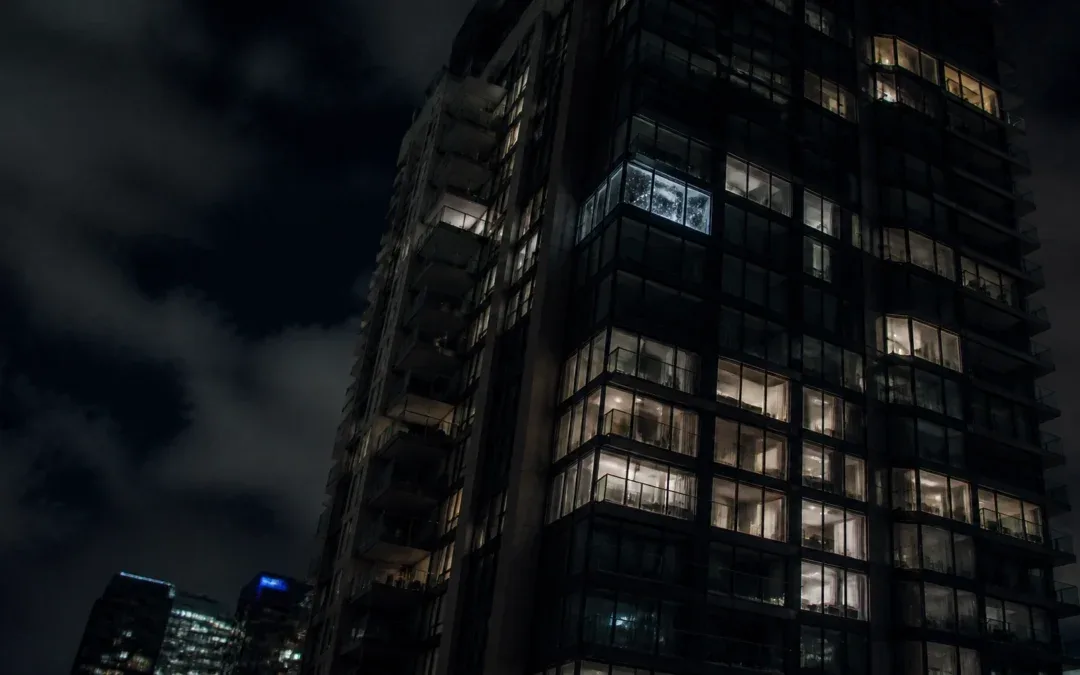
Imagine it’s 2:00 AM on a Tuesday. Your phone buzzes: not with a text from a friend, but with an emergency call from a distressed resident on the 4th floor of your Vancouver high-rise. They’ve got water pouring through their light fixtures. By the time you’ve rubbed the sleep from your eyes, the resident on the 3rd floor is calling. Then the 2nd.
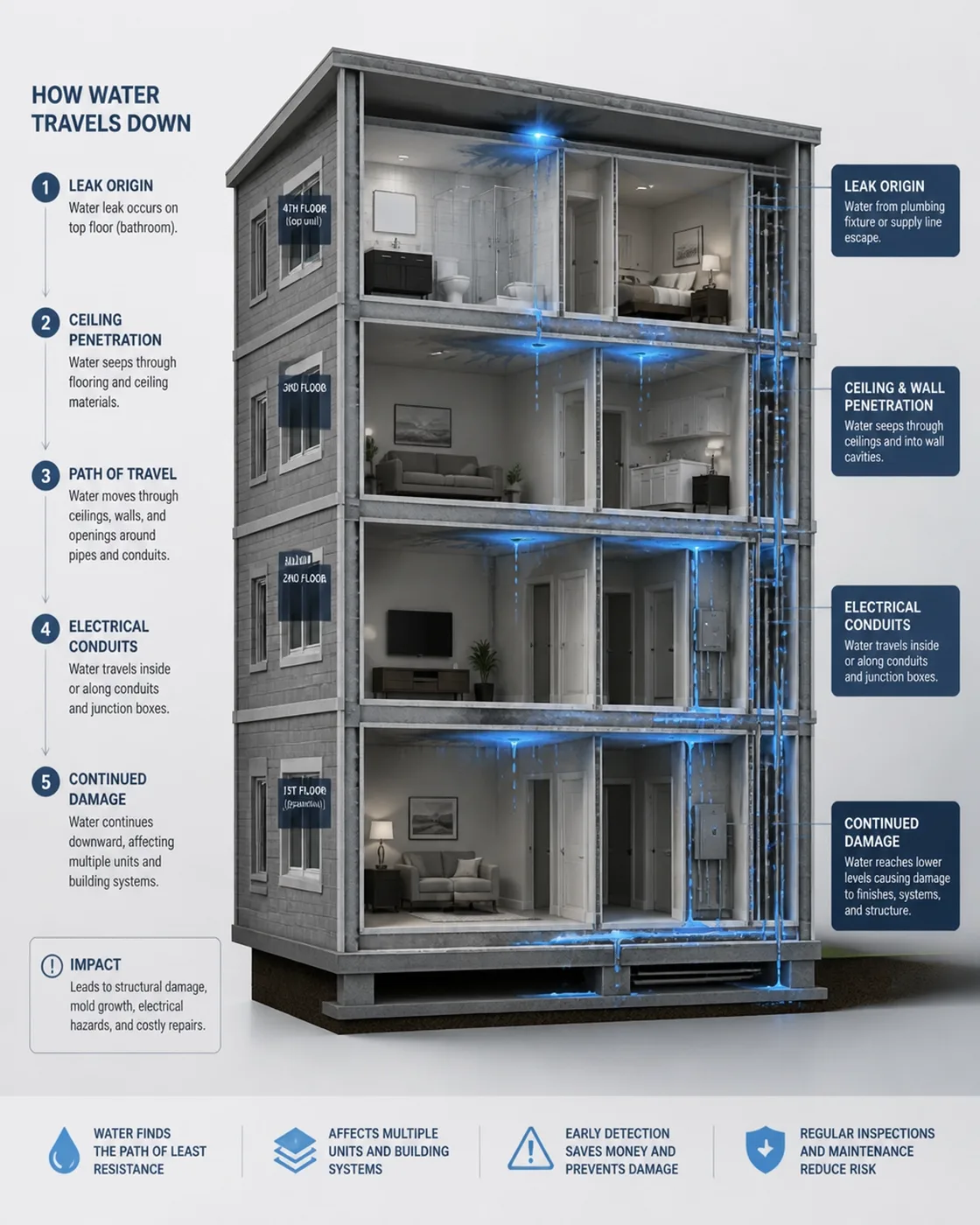
The "nightmare scenario" isn't just a burst pipe; it’s the cascade effect. In a multi-unit dwelling (MDU), water doesn't stay put. It follows gravity, finding its way into electrical conduits, elevator shafts, and ventilation ducts, turning a minor appliance failure on the 12th floor into a multi-million-dollar restoration project that spans the entire building.
At Leak Logic Canada, we see this play out far too often in the Lower Mainland. For property managers and strata councils, the reality of a slow response isn't just a wet floor: it’s a catastrophic blow to the building’s assets, insurance standing, and reserve fund.
The Anatomy of a High-Floor Leak: Why MDUs are Vulnerable
In a single-family home, a leak might ruin a basement. In a Vancouver high-rise, a leak is a vertical invasion. When a dishwasher supply line fails on a high floor, the water quickly saturates the flooring and finds the path of least resistance: usually the gaps around plumbing stacks or electrical wiring.
The Path of Destruction
- Ceilings and Walls: Drywall acts like a sponge, wicking moisture upward and outward.
- Electrical Systems: Water in the conduits can lead to short circuits, fire hazards, and the need for incredibly expensive electrical inspections and replacements.
- Elevator Shafts: This is the big one. If water enters the elevator pit or damages the electronics, you’re looking at weeks of "out of order" signs and astronomical repair bills.
- Common Areas: Hallway carpets and lobby finishes are often custom-ordered and take weeks to replace, leaving the building looking like a construction zone.
The Financial Fallout: 2026 Vancouver Strata Reality
If you think your insurance will just "handle it," the numbers in 2026 might surprise you. In Metro Vancouver, strata water-damage deductibles have skyrocketed. What used to be a $5,000 deductible is now commonly $100,000, $250,000, or even $750,000. We’ve even seen some buildings hit with a $1 million deductible after a string of claims.
When a leak originates in a specific unit, the strata council often has no choice but to "charge back" that deductible to the owner. But here’s the kicker: most individual condo insurance policies only cover about $25,000 of that chargeback. This leaves a massive "uninsured gap" that leads to legal battles, personal financial ruin, and immense pressure on the property manager to mediate a mess that could have been prevented.
Beyond the immediate costs, there’s the issue of insurability. A single major event: like the famous Vancouver case where a 12th-floor burst caused $4 million in damages and displaced 60 residents: can lead to an insurance company refusing to renew coverage for the entire building.
Why Manual Response Always Comes Too Late
The problem with traditional leak detection is that it relies on human eyes and ears. By the time a resident notices water or a concierge hears a drip, the damage is already done.
A slow response of even 30 minutes can allow hundreds of gallons of water to escape. If a leak happens during the workday or while a resident is on vacation, that water could run for days. This is why advanced water detection and insurance savings go hand-in-hand; you simply cannot react fast enough manually to stop a high-floor cascade.
The Solution: Nowa’s "Stop the Cascade" Technology
This is where Leak Logic Canada steps in. We don't just provide "alarms"; we provide automated damage prevention. By installing Nowa Leak Protection Technology, we turn a potential catastrophe into a minor inconvenience.
The USPs that Protect Your Building:
- 0.015-Inch Leak Sensitivity: Our sensors are so precise they detect moisture before it even pools. They are designed to detect actual water, not just humidity, preventing false alarms.
- Gold-Plated Probes: Unlike cheap sensors that oxidize and fail over time, our gold-plated probes stay reliable for years, ensuring they work the one time you actually need them.
- Automatic Water Shutoff: This is the game-changer. Within seconds of a sensor detecting a leak, the Nowa smart valve shuts off the main water supply to the unit. The cascade stops before it ever reaches the floor below.
- Pinpoint Freeze Detection: In BC, sudden temperature drops can lead to burst pipes. Our sensors send a warning if temperatures drop below 5°C, allowing you to act before the pipe fails.

Real-World Results in Vancouver
We’ve seen the proof. One Vancouver high-rise recently installed our sensors and monitoring dashboard across their units. Within just 60 days, the system detected and prevented 14 separate water issues. This included:
- Two overflowing dishwashers.
- Four leaking washing machines.
- A leaking boiler room valve.
Without the Nowa system, at least three of those incidents would have likely breached the floor and caused multi-unit damage. Instead, the total repair cost was essentially zero. The building maintained its insurance standing and avoided hundreds of thousands in potential deductibles. You can read more about these condo water damage strategies here.
Asset Protection for the Long Term
For Property Managers and Strata Councils in Burnaby, Richmond, or downtown Vancouver, installing an IoT leak detection system isn’t just a "building upgrade": it’s a risk-reduction strategy. It protects the building's reserve fund, keeps premiums manageable, and ensures that the property remains a desirable, safe place to live.
Whether you are looking at a retrofit for an older building or a phased implementation for a new development, the goal is the same: prevent the emergency before it happens.

Key Takeaways for Property Managers
- Gravity is the enemy: High-floor leaks move vertically and hit electrical and elevator systems first.
- Deductibles are rising: Vancouver strata deductibles now frequently range from $100k to $750k.
- Manual is too slow: You need smart water leak detectors to stop water in seconds, not hours.
- Precision matters: Look for 0.015-inch sensitivity and gold-plated probes for long-term reliability.
Community Spotlight: Protecting Our Vancouver Skyline
At Leak Logic Canada, we understand the specific pressures that Vancouver strata councils face. Between rising construction costs and insurance volatility, the last thing you need is a flood. We’re here to help you navigate these challenges with technology that pays for itself the very first time it stops a leak.
What’s the biggest water safety concern in your building right now? Is it aging poly-B pipes, or the risk of resident negligence?
Don't wait for the 2:00 AM phone call. Let’s talk about how we can safeguard your portfolio across the Lower Mainland.
Contact Leak Logic Canada today for a professional assessment of your multi-unit property.
📞 604-363-1812
📍 Serving Vancouver, Burnaby, Richmond, Surrey, and Coquitlam.
Don't wait for a leak to happen.
Protect your property with a professionally installed NOWA automatic shut-off system. Contact us for a free assessment.